Soul migration rules
Fever DreamThe Soul migration rules are a perilous method for responding to poisoning: a healer proposes moving a sick child’s spirit into a healthy body, dividing the burden of poison while allowing an unknown spirit to enter the abandoned body. The procedure offers Carla a chance to save David, not a promise of recovery, and its terms make clear that survival may require accepting a changed child and continuing to care for the body left behind. The account grounds this extraordinary practice in a chain of ordinary, observable events: a missing stallion, a stream, a dead bird, and the shared danger to animal and child.
The crisis that prompts migration
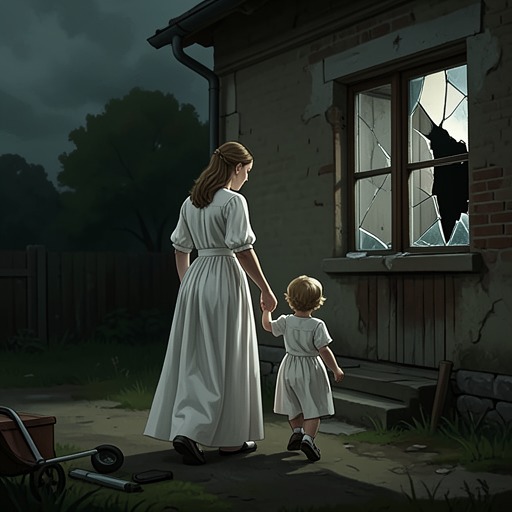
Carla’s account begins with a horse whose value is bound up with her family’s hopes. Omar had once bred racehorses elsewhere in town, then moved his operation to the land where he and Carla lived after she became pregnant. Their arrangement with a stallion’s owner could cost them a quarter of the money from the foals; a well-raised foal might sell for 200,000 to 250,000 pesos. When the borrowed stallion disappears from the pasture, Carla searches with David, who is still small enough to be carried. She finds the horse drinking from the stream and retrieves it, but David has knelt beside the water and put his fingers in his mouth. A dead bird lies nearby. Carla gets him away without telling Omar what happened, believing the immediate danger has passed.
The next morning, the stallion is gravely ill. Its eyes and mouth are swollen, and it can barely whinny; Omar calls a veterinarian while neighbors gather. Carla fears that David drank the same water and will die if the horse dies. She does not wait for a rural doctor: in her judgment, the delay could outlast the time available to save him. It is in that emergency that a woman offers migration as the only method she knows that might save David.
What the procedure promises—and costs
The woman explains that if David’s spirit can be moved in time, some of the poison will move with it. Dividing the burden between two bodies might allow him to pull through, but the result is uncertain. Migration is not a simple transfer into an empty, chosen destination. The woman cannot select or identify the family that will receive David, and she warns that neither body can contain two spirits—or exist without one. David would enter a healthy body, while an unknown spirit would enter his sick one; something of each spirit would remain in the other body.
Those conditions make the mother’s consent more than a decision to accept risk. Carla is told that David will not be the same and that she must accept his new being. She is also told that, although David’s spirit will leave the poisoned body, she will remain responsible for that body, whatever happens to it. Carla wants to know where David will go, but the woman says it is better not to know. The bargain asks her to relinquish certainty about his destination while retaining responsibility for what is left behind.
Carla agrees when David returns to her, weak and feverish. She carries him to a room at the end of the hall, where the woman prepares a low basin with water, along with a spool of thin hemp rope and a hand fan. Carla is told to stay in the kitchen: during migration, only what has been prepared to move should be in motion, and she might shift other things by moving through the house. She waits with a cup of tea, listening to no call or cry from David, and remains against the wall for what she estimates may be two hours. The rule about movement turns the house into a controlled space, where stillness is part of the procedure and the mother’s helpless waiting is its human cost.
The return and its signs
When David comes back, Carla does not immediately embrace him. He advances in uncertain steps, leaning on a table; his hands are dirty, his feet wet, and damp prints begin to dry behind him. She sees lines around his wrists, and above them, that may have been left by the rope. The woman explains that this is meant to ensure that only the spirit leaves: the body has to stay. She is yawning and says the effect of migration will happen to David too. He must yawn with his mouth open to let it go.
The procedure thus leaves evidence in the body rather than offering Carla an uncomplicated reunion. The restraints’ marks, the woman’s explanation, and the instruction to yawn establish that migration is physical as well as spiritual, while also marking its limits: the body is not the spirit, but it remains present and under Carla’s care. The account does not establish precisely what David retains from the unknown spirit or what becomes of the spirit that enters his body. Its rule is consequence without certainty, and Carla must confront the returned child without knowing all that has changed.
A wider pattern of contamination and absence
The childhood episode is connected to later signs that the danger extends beyond one sick body. In another scene, two men unload large plastic drums from a truck beside a shed; the barrels are heavy enough to require effort to carry, and one is left by the doorway. The narrative marks the moment as consequential but does not, in these details alone, establish what the drums contain or prove a direct link between them and David’s earlier illness. That distinction matters: the book places possible sources and poisoning in the same field of suspicion without making every connection explicit.
Elsewhere, Carla recounts a morning when Omar finds the pasture emptied of horses. Only a four-month-old foal remains, standing alone and motionless with fear. Omar searches the surroundings, but the horses are nowhere to be seen. The foal is still there when the police inspector and his two assistants arrive and leave; Carla watches from a window, unable to make herself go outside. Its survival beside the disappearance of the other horses echoes the migration account’s separation of one body from what once surrounded it, but the story does not say that the migration caused the animals’ disappearance.
The poisoning is not confined to Carla’s remembered crisis. In a later scene, Amanda and Nina are poisoned, yet the people treating them give them medicine for sunstroke. The narration identifies the condition as poisoning while exposing a gap between what is happening and what the medical response recognizes. Read alongside David’s exposure to the stream and the stallion’s illness, this misdiagnosis gives migration a broader context: the method is an extraordinary response to danger in a setting where the cause and reach of poisoning remain difficult to establish. The rules promise a way to divide its burden, but they do not identify the poison, guarantee a cure, or resolve the larger pattern of harm.